


This post may contain affiliate links. Read my disclosure policy.
What Is Sinigang?
Sinigang is a traditional Filipino soup known for its signature sour broth. It originated in the Philippines and is considered one of the country’s most beloved comfort foods. The word sinigang comes from the Tagalog verb “sigang,” which means to stew.
Historically, sinigang was made using natural souring agents like tamarind, calamansi, green mango, kamias, or even guava. Over time, tamarind became the most popular base, giving sinigang its iconic mouth-clenching sourness that makes you scrunch your face on the first sip but somehow keeps you going back for more. It’s sour, savory, and incredibly satisfying.


There are many variations of sinigang depending on the protein and region. Some of the most common types include:
- Pork Sinigang (Sinigang na Baboy)
- Shrimp Sinigang (Sinigang na Hipon)
- Fish Sinigang (Sinigang na Isda)
- Beef Sinigang
- Chicken Sinigang
Why You Will Love This Shrimp and Pork Belly Sinigang Recipe
If you’ve been following me for a while, you already know how much sinigang means to me and my husband. It is one of the first Filipino recipes I learned to make, and my mother-in-law, Mama Josie, was the one who taught me how to make it.
Since then, I’ve made sinigang more times than I can count. In fact, I’ve made it 27 times this year alone, and we’re still not tired of it! There is just something about a big bowl of sinigang that feels like a warm hug. It’s comforting, flavorful, and packed with all of our favorite vegetables.
I’ve been on a mission to try as many different versions of sinigang as I possibly can, and this shrimp and pork belly version was one you guys specifically asked me to make. When I first asked my TikTok community which version of sinigang I should make next, salmon was the most popular request, followed by shrimp. After making my Salmon Sinigang, I knew this shrimp and pork belly version had to be next.
If you’ve tried my Pork Sinigang, you already know that pork belly is my husband and I’s absolute favorite. The pork belly gets so tender and juicy as it cooks, and adding whole shrimp takes this version to another level. You also get all of those classic sinigang vegetables like bok choy, okra, string beans, daikon radish, eggplant, and tomato.
This soup is especially perfect as we head into cooler weather, but honestly, I don’t care what the weather is doing. It’s never a bad day for sinigang!
Ingredients
- Pork belly: The star of the soup for us! Pork belly becomes incredibly tender as it simmers and adds so much richness and flavor to the broth.
- Whole shrimp: I use head-on, tail-on shrimp for even more flavor. The shrimp cooks quickly at the very end so it stays juicy and tender.
- Tomato and onion: These aromatics create a flavorful base for the soup and add a little natural sweetness and acidity.
- Taro: Adds a soft, starchy texture to the soup and helps make the broth even more satisfying.
- Fish sauce: Adds savory, salty, umami flavor to the broth.
- Knorr Sinigang soup mix: Gives the soup its signature sour, tamarind flavor and makes it easy to get that classic sinigang taste.
- Thai chiles: Add a little heat to the soup. These are optional, but my husband loves a little kick.
- Daikon radish: Adds a mild, slightly sweet flavor and becomes tender as it cooks.
- Eggplant: A classic sinigang vegetable that becomes soft and absorbs all of that delicious sour broth.
- Okra: Adds a tender texture and helps make the broth feel a little richer. My absolute favorite!
- Bok choy: Adds freshness, color, and a tender crunch to the finished soup.
- Green beans: Add another layer of texture.
- Salt and black pepper: Used to season the pork and balance the flavors of the soup.
- Water: Creates the broth and gives everything room to simmer together.

How to Make Shrimp and Pork Belly Sinigang
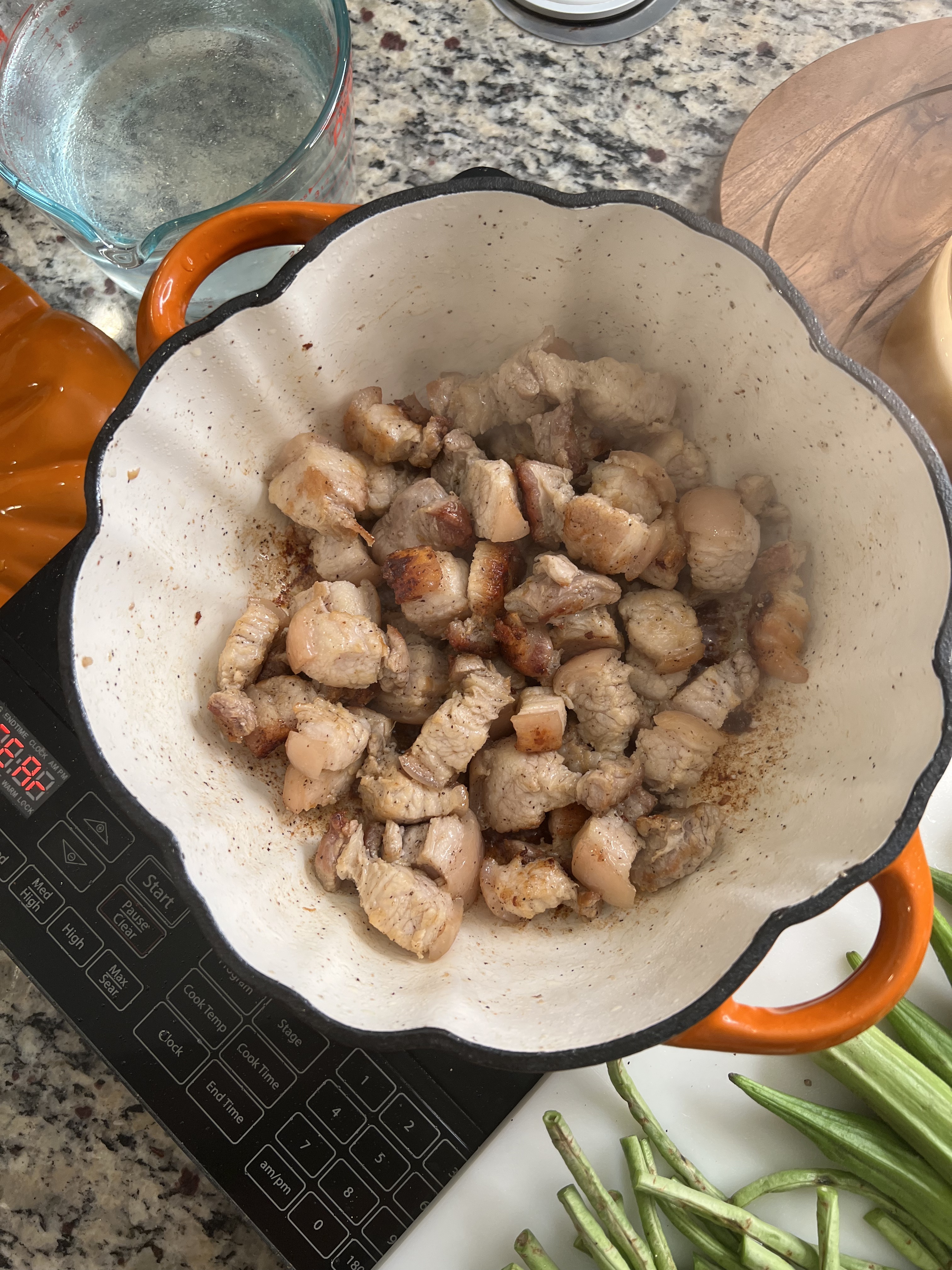
Start by seasoning the pork belly with salt and black pepper. Heat a large pot over medium-high heat and sear the pork belly until it is nicely browned on the outside. Once browned, remove the pork belly from the pot and set it aside.


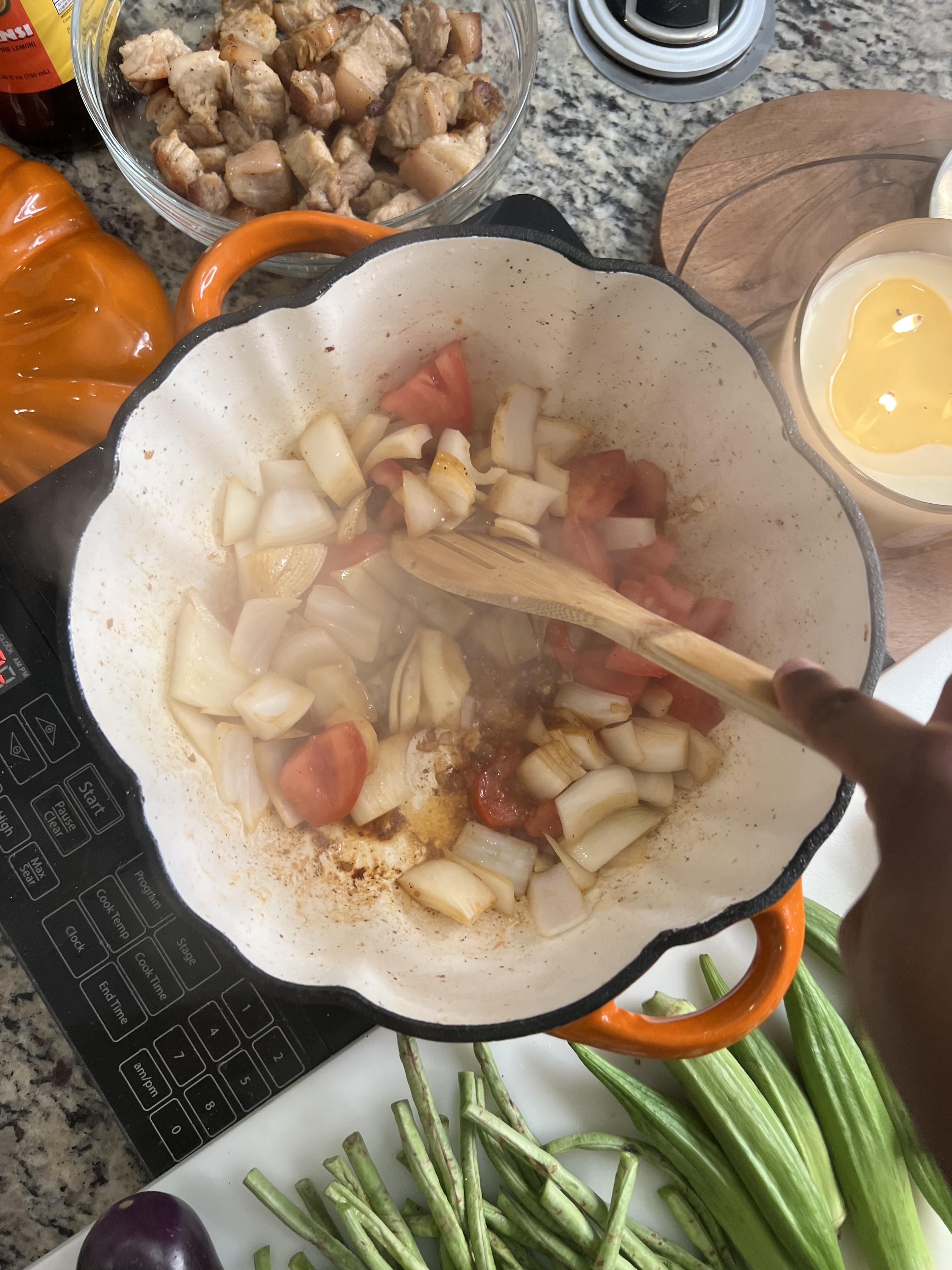
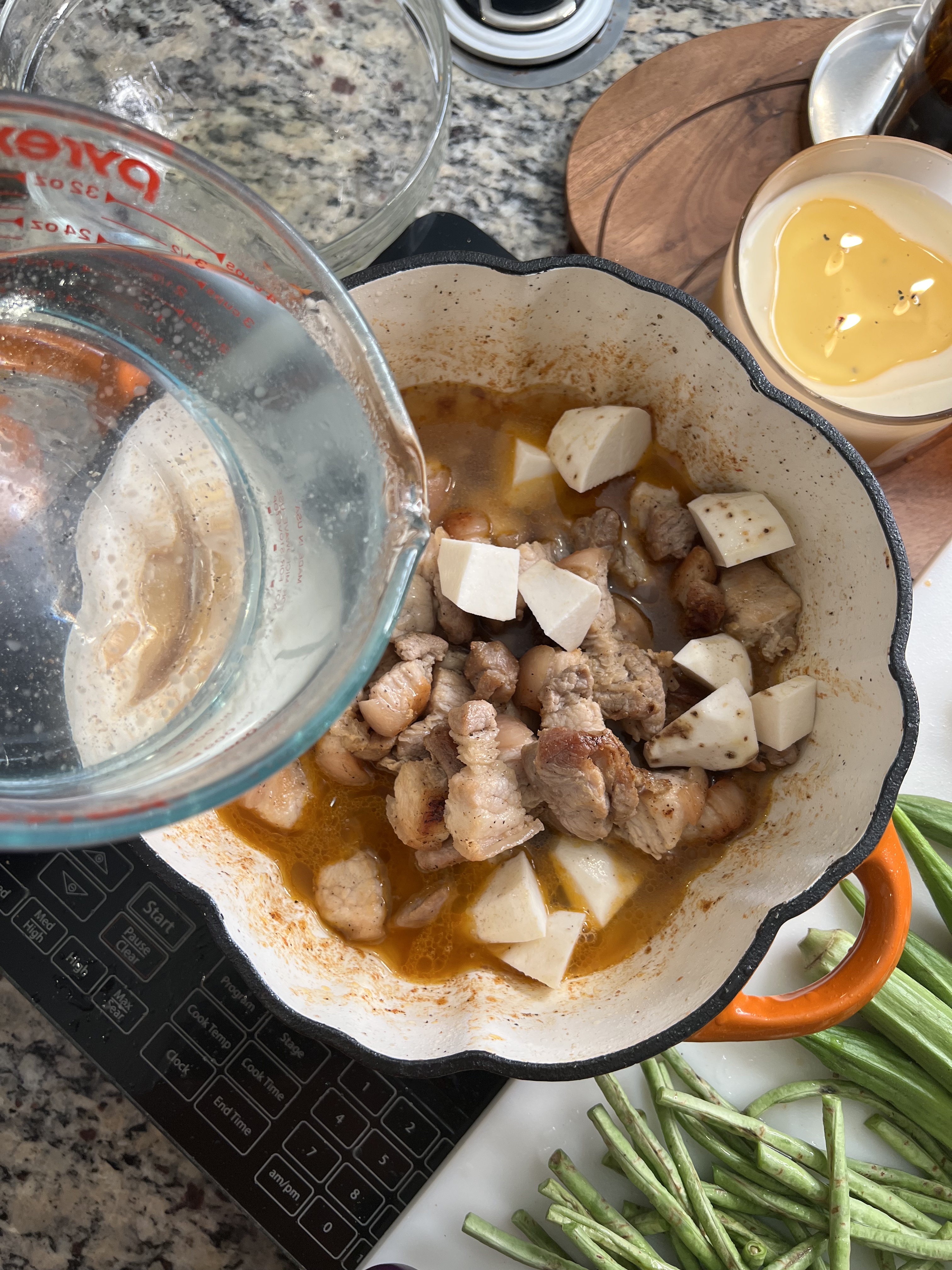
Using the same pot, sauté half of the chopped onion and half of the tomato until the vegetables soften and become tender. Add the browned pork belly back to the pot along with the taro, fish sauce and cover with water. I use about a tablespoon of fish sauce, but you can adjust it to your taste.


Bring the soup to a boil. Reduce the heat and let the pork belly simmer until it becomes tender. This is the part where you want to give the pork enough time to soften and become nice and tender.


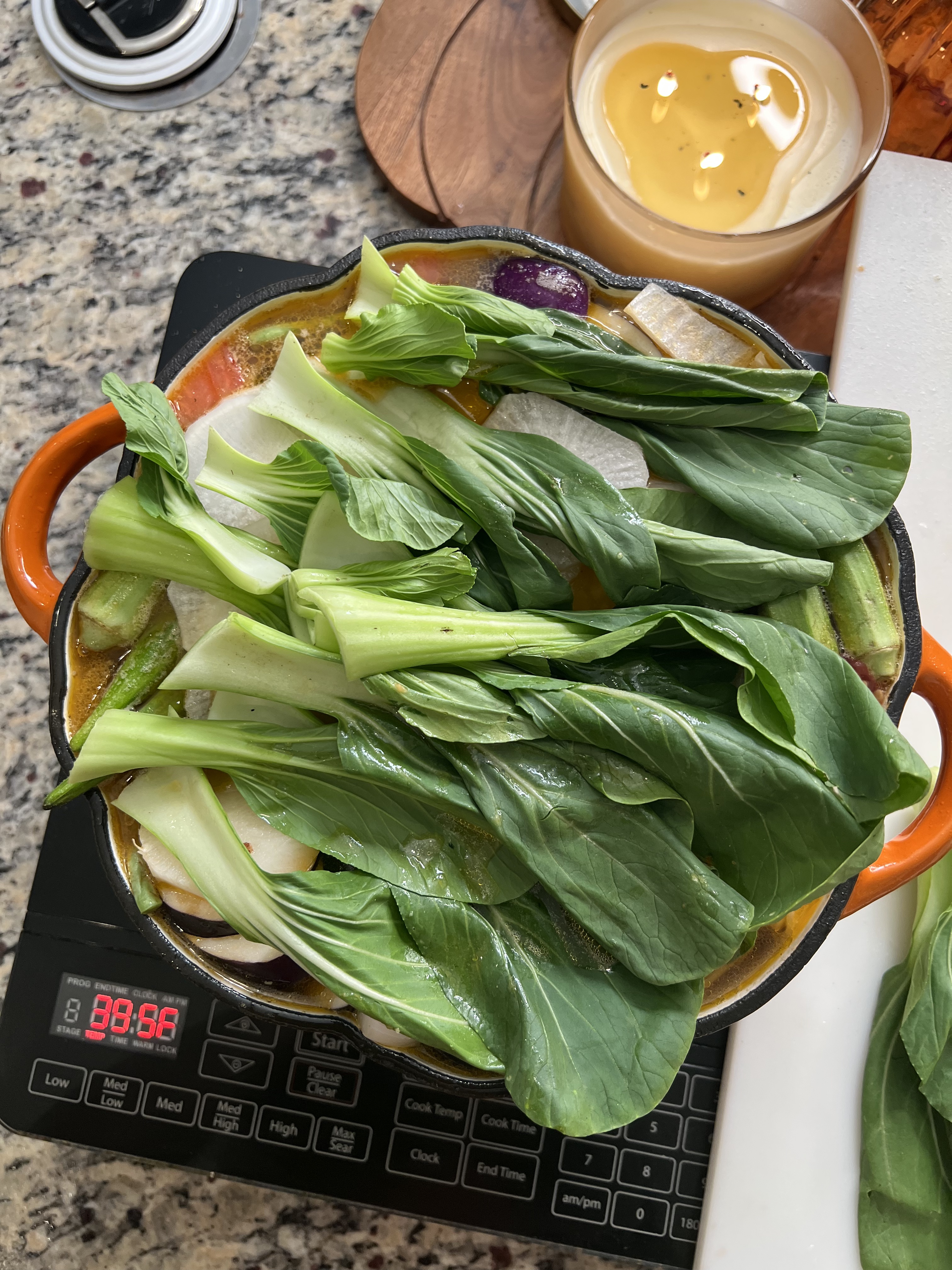
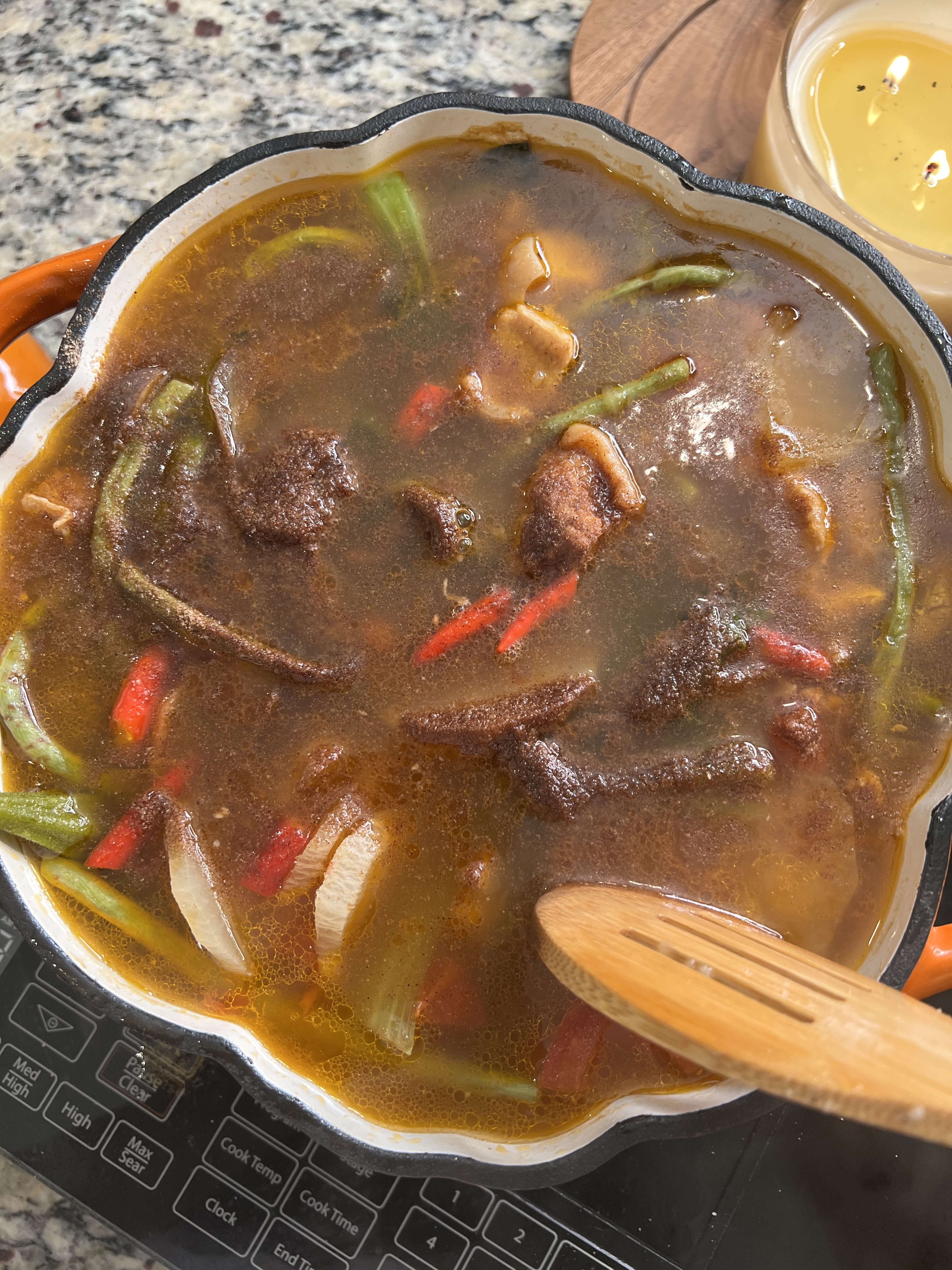
Once the pork belly is tender, add more water if needed to bring the soup back to your desired amount of broth. Add the daikon radish, eggplant, the remaining tomato and onion, okra, bok choy, and green beans. Let the soup boil until the vegetables begin to soften.


Next, add the Thai chiles and Knorr Sinigang soup mix. Stir until it is completely incorporated into the broth. Taste the soup and adjust the fish sauce or salt if needed.


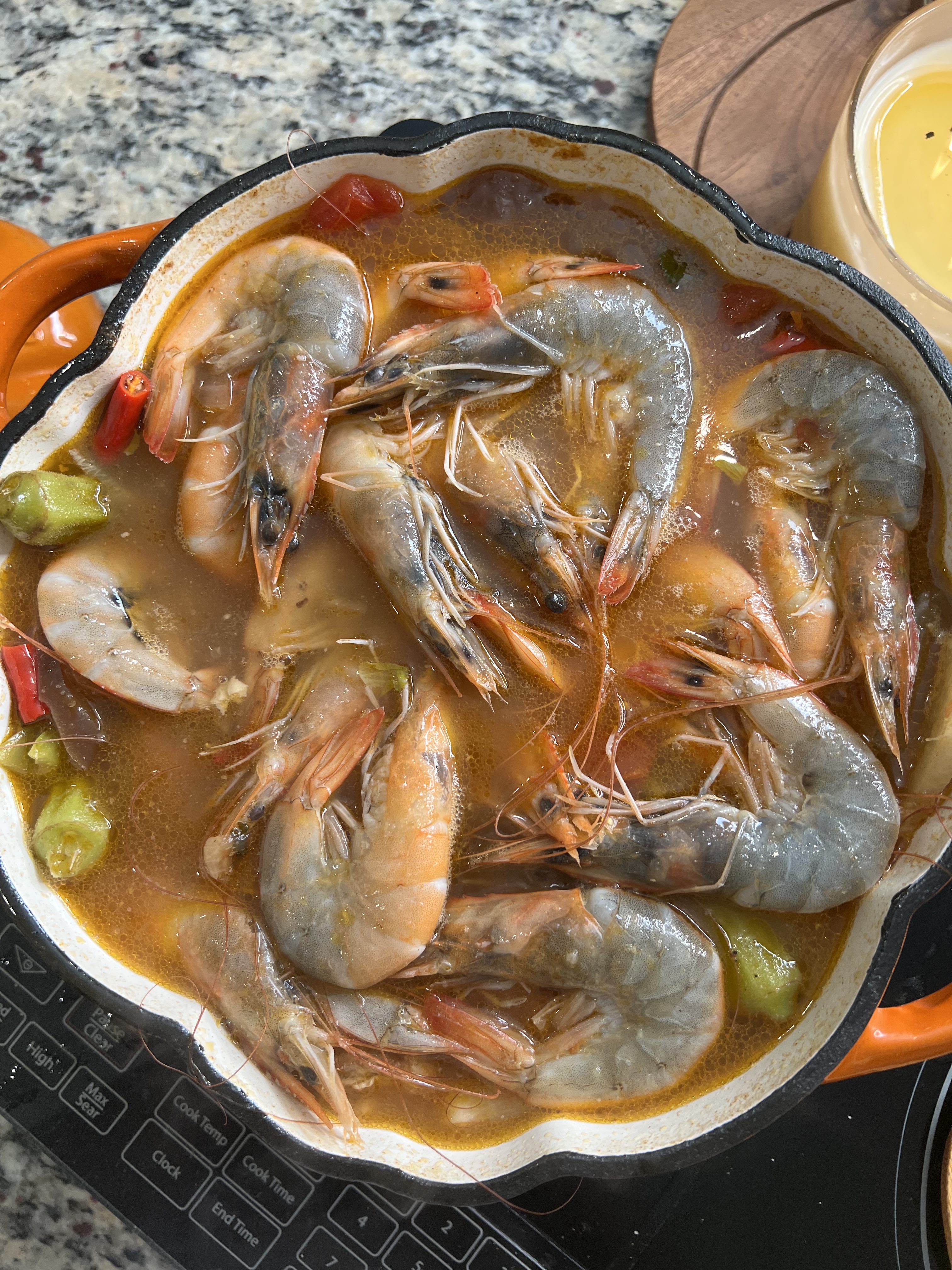
Finally, add the whole shrimp to the pot. Let everything cook just until the shrimp turn pink and are cooked through. Shrimp cook quickly, so be careful not to overcook them.


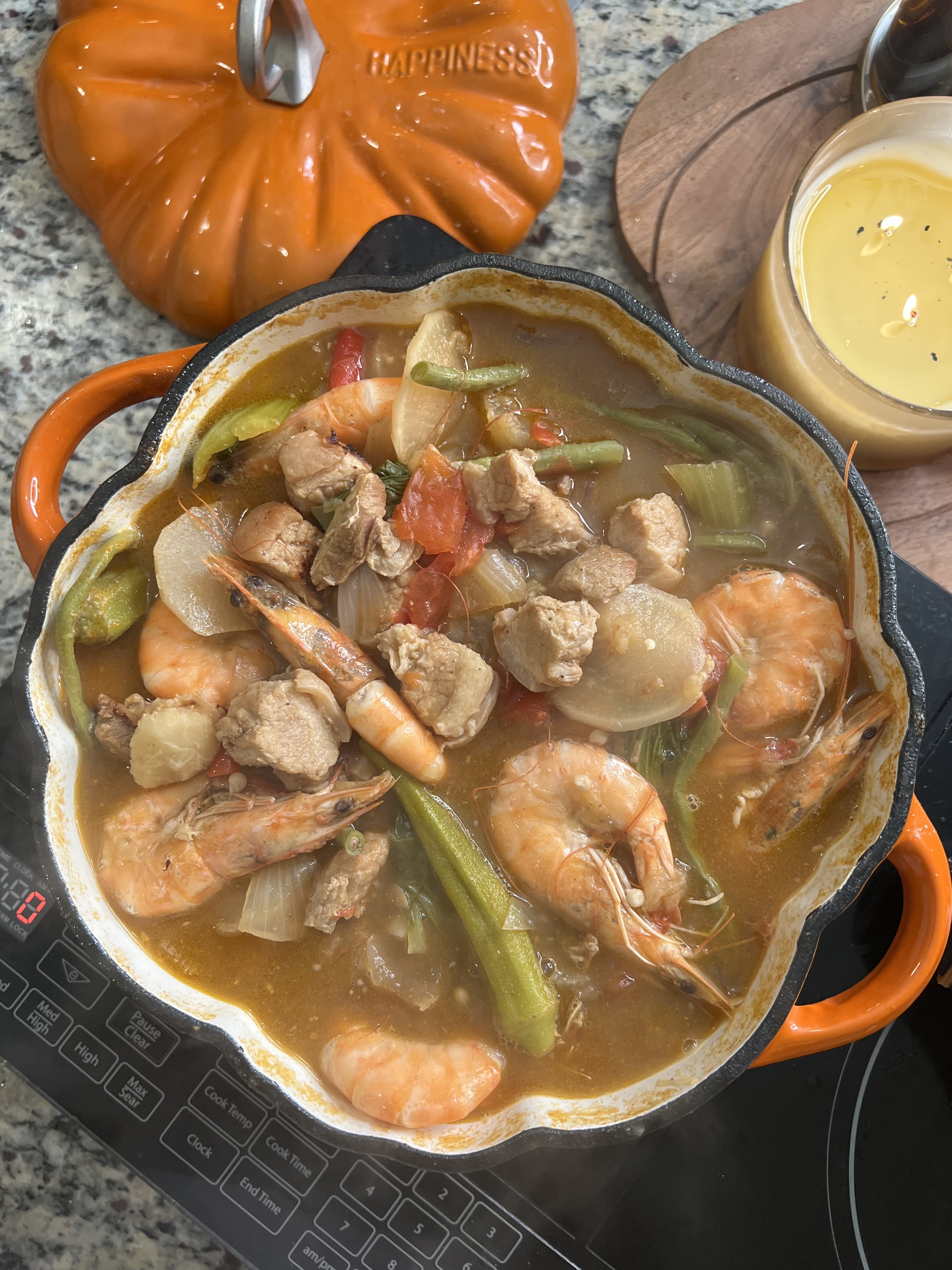
Once the shrimp are cooked, turn off the heat. Serve the sinigang hot with plenty of steamed rice and enjoy a big comforting bowl of my favorite soup!

Hey Foodie! Want more recipes like this? Subscribe to Ne’s Kitchen Newsletter!
Tips for the Best Shrimp and Pork Belly Sinigang
- Sear the pork belly first: Browning the pork before simmering adds another layer of flavor to the soup.
- Give the pork time to become tender: Pork belly needs time to soften, so don’t rush the simmering process.
- Add the vegetables in stages: Some vegetables need more time to cook than others, which is why they are added after the pork becomes tender.
- Don’t overcook the shrimp: Shrimp only need a few minutes to cook. Add them at the very end and turn off the heat once they are pink and cooked through.
- Taste before serving: Fish sauce, salt, and sinigang soup mixes can vary in saltiness, so taste the broth before serving and adjust as needed.
- Serve it with rice: A big bowl of steamed white rice is the perfect pairing for sinigang. I love spooning that sour, savory broth right over the rice.
Variations & Substitutions
- Use different cuts of pork: Pork belly is our favorite, but you can also make sinigang with pork neck bones, pork shoulder, or other cuts of pork. Check out my Pork Neck Bone Sinigang.
- Make it shrimp-only: If you don’t want pork, you can leave it out and make a shrimp sinigang instead.
- Try salmon: Salmon is another delicious way to make sinigang. If you’re looking for a seafood version, check out my Salmon Sinigang.
- Adjust the spice: Leave out the Thai chiles for a milder soup or add more if you like your sinigang spicy.
- Use your favorite vegetables: Sinigang is one of those recipes that you can easily customize. Add or leave out vegetables based on what you enjoy or have available.
- Adjust the sourness: Add more or less sinigang soup mix depending on how tangy you like your broth.
Other Recipes You Will Love
If you loved this, you have to check out my other Filipino recipes!
Shrimp and Pork Belly Sinigang Recipe
Description
his shrimp and pork belly sinigang is a comforting Filipino soup packed with tender pork, whole shrimp, vegetables, and savory tamarind broth.
Ingredients
Instructions
-
Season the pork belly with salt and black pepper. Heat a large pot over medium-high heat and sear the pork belly until browned on the outside. Remove the pork from the pot and set aside.
-
In the same pot, sauté half of the chopped onion and half of the chopped tomato until softened and tender.
-
Add the browned pork belly, water, taro, and fish sauce. Bring to a boil then reduce the heat and simmer until the pork belly is tender.
-
Once the pork is tender, add more water if needed. Add the daikon radish, eggplant, remaining tomato and onion, okra, bok choy, and green beans.

-
Let the soup boil until the vegetables begin to soften. Add the Knorr Sinigang soup mix and stir until fully incorporated. Taste and adjust the seasoning with fish sauce or salt as needed.
-
Add the Thai chiles and whole shrimp. Cook just until the shrimp turn pink and are cooked through.
-
Turn off the heat and serve hot with steamed white rice.
Nutrition Facts
Servings 6
- Amount Per Serving
- Calories 570kcal
- % Daily Value *
- Total Fat 35g54%
- Saturated Fat 13g65%
- Cholesterol 190mg64%
- Sodium 1850mg78%
- Total Carbohydrate 28g10%
- Dietary Fiber 7g29%
- Sugars 10g
- Protein 40g80%
* Percent Daily Values are based on a 2,000 calorie diet. Your daily value may be higher or lower depending on your calorie needs.


