


This post may contain affiliate links. Read my disclosure policy.
Why You Will Love This Filipino Chicken Adobo Recipe
Chicken adobo is one of those meals that is simple, comforting, and incredibly flavorful. If you’re looking for an easy chicken dinner that pairs perfectly with a big bowl of rice, you need to try this Filipino chicken adobo.


I made this for my family for the first time, and they absolutely fell in love with it. They told me it reminded them of something familiar, almost like a Filipino version of smothered chicken. The chicken is tender and flavorful, and the sauce is savory, tangy, slightly sweet, and packed with garlic and pepper.
This is one of my favorite meals to make when I’m craving something comforting, quick, and reliable. The ingredients are simple, but the combination of soy sauce, vinegar, garlic, bay leaves, and pepper creates so much flavor.
If you’ve never made chicken adobo before, this is a great recipe to start with. And if you’re already a chicken adobo lover, I think you’re going to love this version!
Ingredients
- Bone-in chicken thighs and legs: I use a combination of thighs and legs, but you can use whichever chicken pieces you prefer. Bone-in chicken adds plenty of flavor and stays juicy while it simmers.
- Soy sauce and vinegar: These are the foundation of the adobo sauce, giving the chicken its signature savory, salty, and tangy flavor.
- Light brown sugar: Adds a touch of sweetness that balances the saltiness and acidity of the sauce.
- Whole black peppercorns: Add a delicious peppery bite and little bursts of spice throughout the dish.
- Garlic and onion: These aromatics build a flavorful base and add savory depth to the sauce.
- Bay leaves: Add a subtle earthy flavor that helps round out the adobo sauce.
- Water: Helps create the braising liquid and gives the chicken room to simmer and become tender.

How to Make Filipino Chicken Adobo
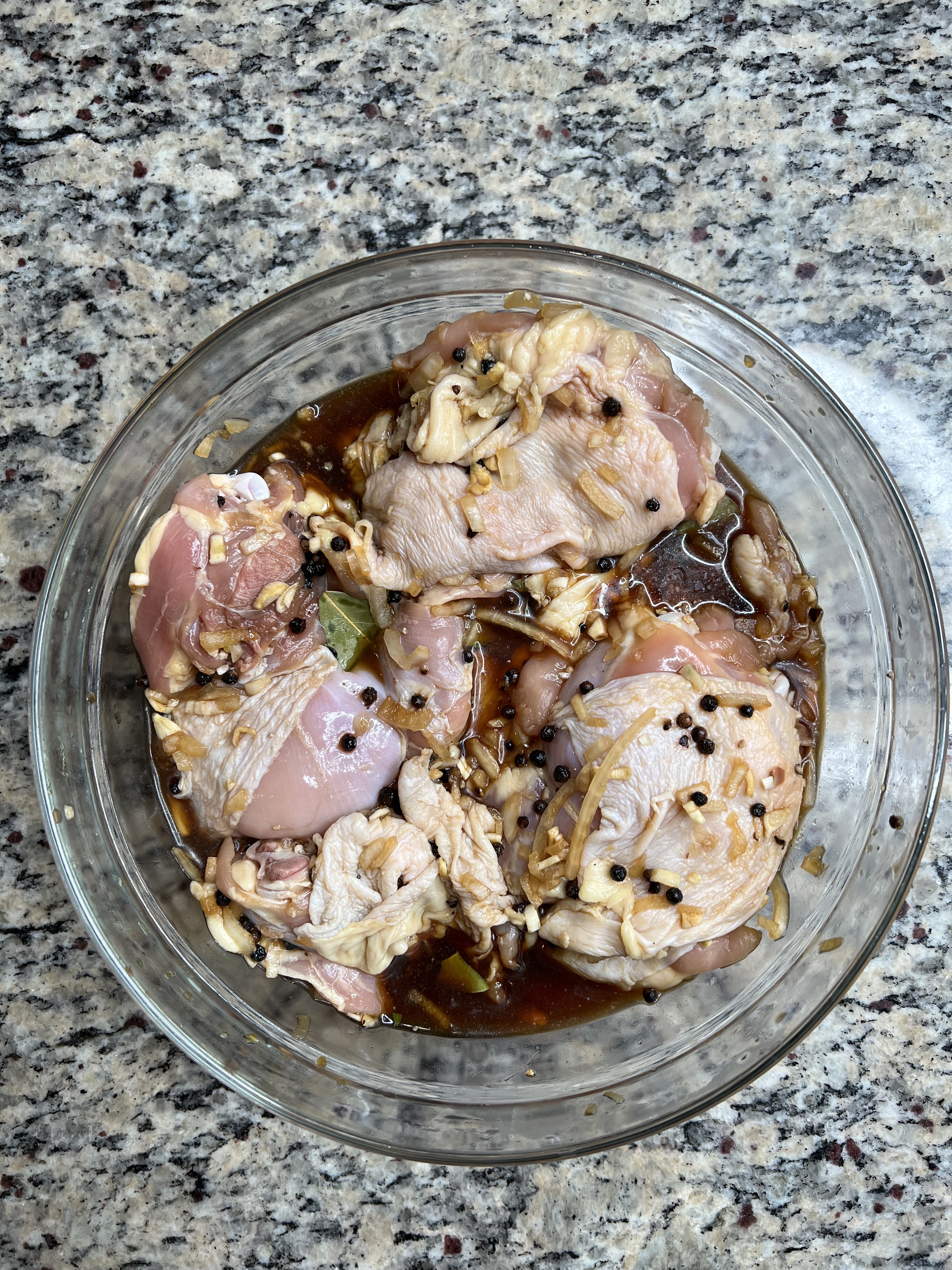
Start by adding the chicken to a large bowl with the soy sauce, vinegar, brown sugar, whole peppercorns, minced garlic, chopped onion, and bay leaves. Mix everything together, making sure the chicken is well coated in the marinade. Cover and refrigerate for at least 1 hour, or up to 24 hours for best results.

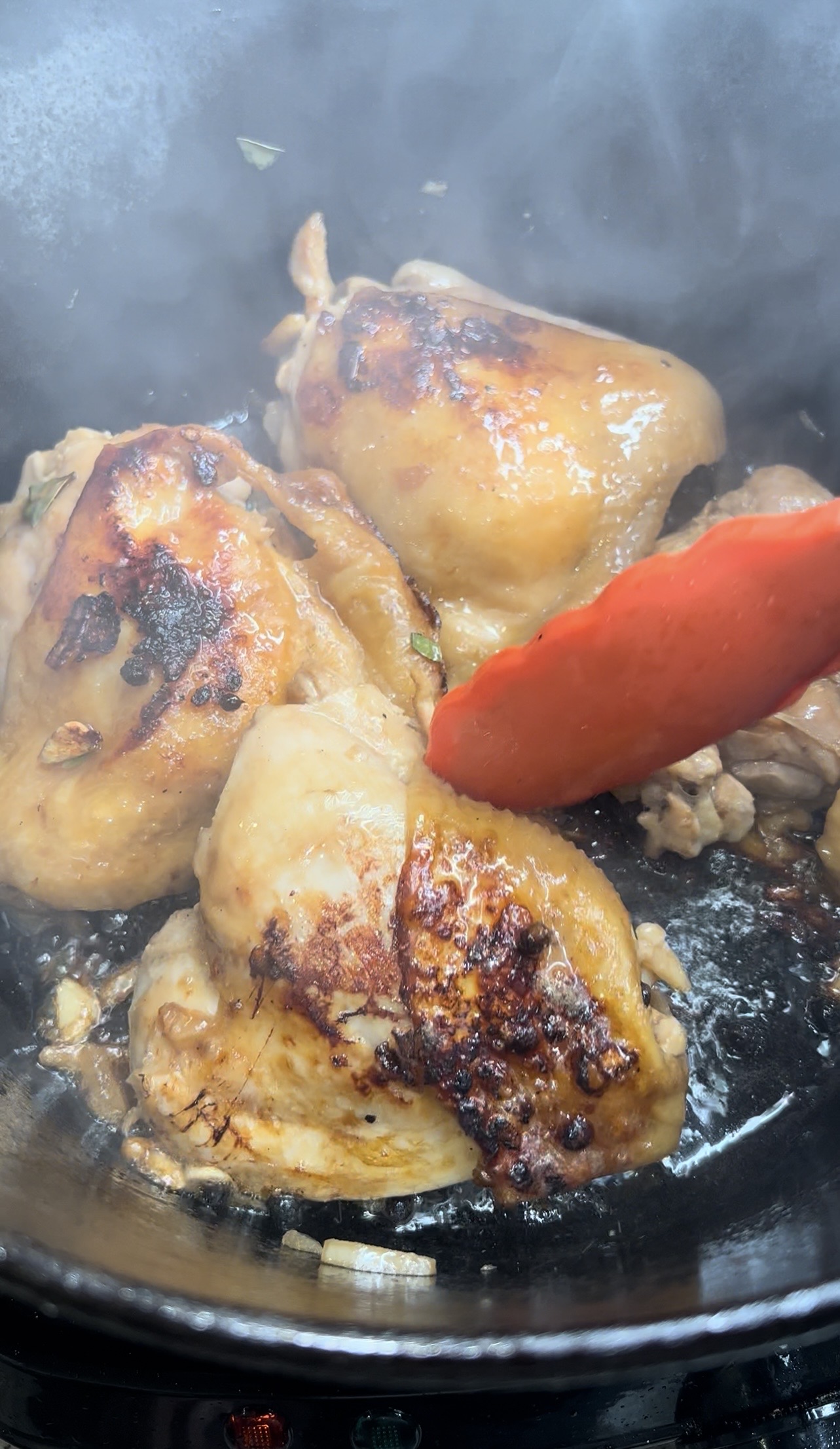
Once you’re ready to cook, heat a cast iron pot over medium-high heat. Remove the chicken from the marinade, making sure to reserve all of the marinade, and sear the chicken on both sides until nicely browned. This step is important. Browning the chicken helps develop deeper flavor and gives the outside of the chicken a beautiful golden-brown color.


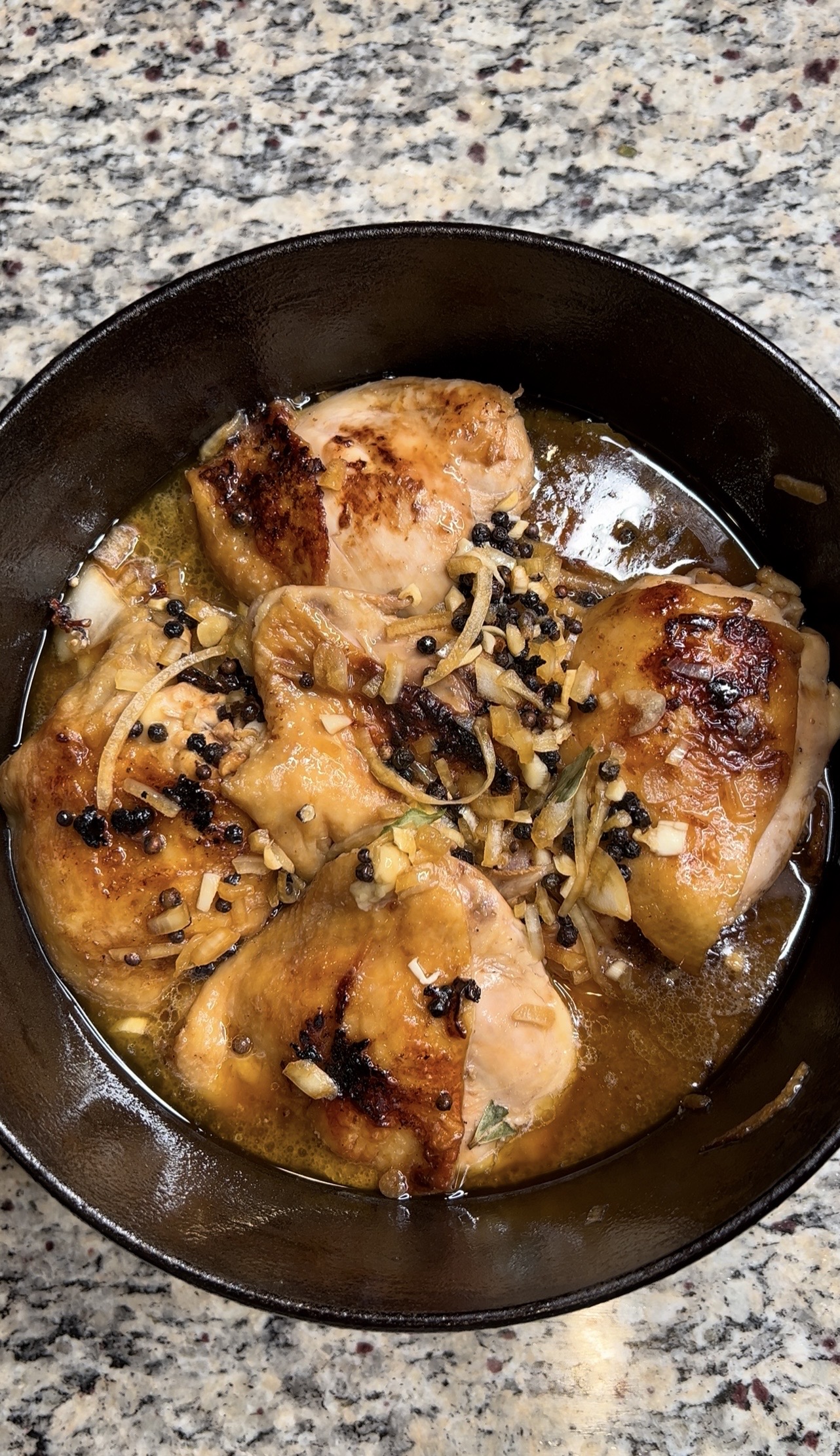
Once the chicken is browned, pour the reserved marinade into the pot along with the water. Cover and let everything simmer over medium heat for about 30 minutes, or until the chicken is tender and cooked through.


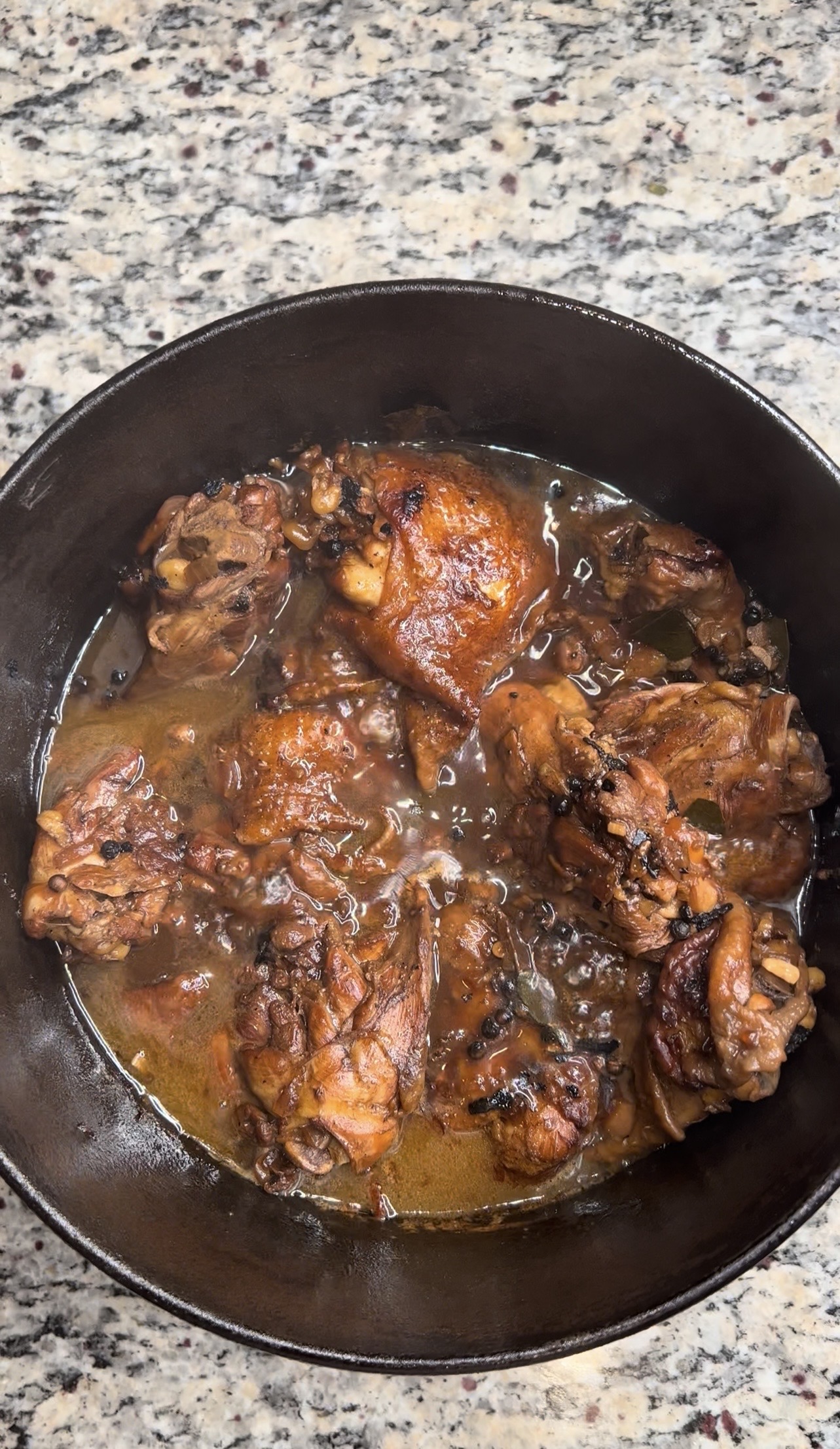
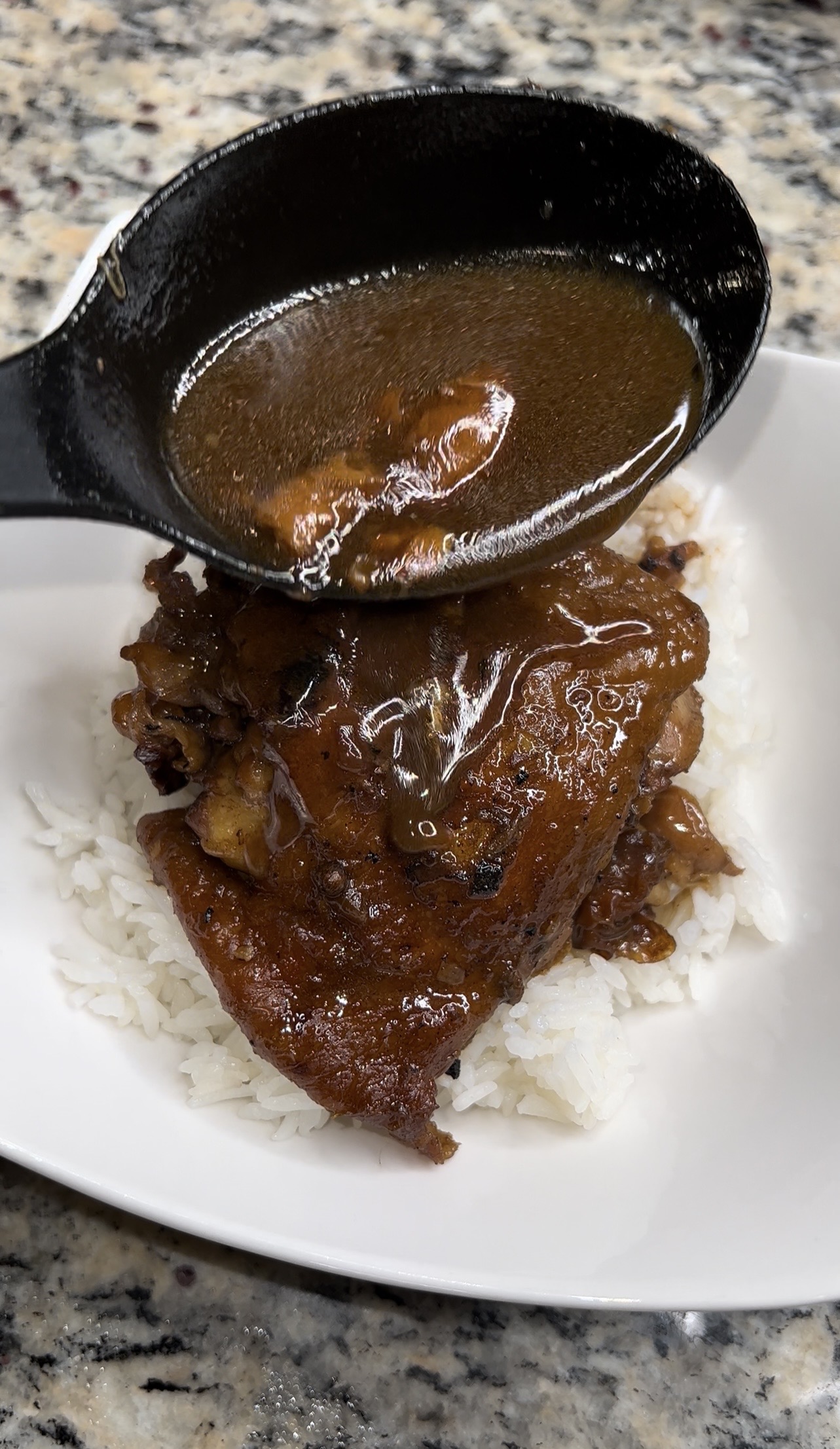
Remove the lid and reduce the heat to medium-low. Continue simmering uncovered until the sauce reduces and thickens into a rich, gravy-like consistency.


Serve the chicken hot over steamed white rice and spoon plenty of that delicious adobo sauce over the top. Trust me, you want that sauce all over your rice!


Hey Foodie! Want more recipes like this? Subscribe to Ne’s Kitchen Newsletter!
Tips for the Best Chicken Adobo
- Don’t skip the marinade: Marinating the chicken gives the soy sauce, vinegar, garlic, pepper, and other seasonings time to penetrate the chicken and build deeper flavor.
- Don’t skip browning the chicken: Searing the chicken before simmering develops a delicious browned exterior and adds another layer of flavor to the finished dish.
- Use bone-in chicken: Bone-in thighs and legs stay juicy and tender while simmering and add plenty of flavor to the sauce.
- Let the sauce reduce: Don’t rush the final step. Letting the sauce simmer uncovered allows it to concentrate and become thick, rich, and flavorful.
- Taste your sauce: Soy sauce can vary in saltiness, so taste the sauce toward the end and adjust if needed.
- Serve with plenty of rice: The adobo sauce is one of the best parts of the dish, and steamed rice is perfect for soaking it all up.
Variations & Substitutions
- Use regular black pepper: You can absolutely substitute regular ground black pepper for whole peppercorns. My husband actually prefers it this way because he’s not a big fan of the whole peppercorn texture. I personally love whole peppercorns because you get little bursts of pepper and spice throughout the dish.
- Use different chicken pieces: You don’t have to use a combination of thighs and legs. Use all thighs, all legs, or whatever bone-in chicken pieces you have on hand.
- Use white vinegar or cane vinegar: Both work well in chicken adobo. Cane vinegar is commonly used in Filipino cooking, but distilled white vinegar is an easy and accessible substitute.
Other Recipes You Will Love
If you loved this, you’ll love my other Filipino Recipes!
Filipino Chicken Adobo Recipe
Description
This Filipino chicken adobo is tender, savory, tangy, and packed with garlic, soy sauce, vinegar, and pepper. An easy, comforting chicken dinner!
Ingredients
Instructions
-
Add the chicken, soy sauce, vinegar, brown sugar, peppercorns, garlic, onion, and bay leaves to a large bowl. Mix well to coat the chicken. Cover and marinate for at least 1 hour or up to 24 hours.
-
Heat a cast-iron pot over medium-high heat. Remove the chicken from the marinade, reserving the marinade, and sear the chicken on both sides until browned.
-
Pour the reserved marinade into the pot along with 1 cup of water. Cover and simmer over medium heat for about 30 minutes, or until the chicken is tender and cooked through.

-
Remove the lid and reduce the heat to medium-low. Continue cooking uncovered until the sauce thickens into a rich, gravy-like consistency.
-
Serve hot over steamed white rice with plenty of adobo sauce spooned over the top.
Nutrition Facts
Servings 6
- Amount Per Serving
- Calories 680kcal
- % Daily Value *
- Total Fat 45g70%
- Saturated Fat 12g60%
- Cholesterol 250mg84%
- Sodium 2800mg117%
- Total Carbohydrate 13g5%
- Dietary Fiber 1g4%
- Sugars 9g
- Protein 51g102%
* Percent Daily Values are based on a 2,000 calorie diet. Your daily value may be higher or lower depending on your calorie needs.


