This post may contain affiliate links. Read my disclosure policy.
Why You Will Love This Salmon Head Sinigang (Filipino Sour Soup)
If you’ve been following me for a while, then you already know how much I LOVE Filipino food, but specifically, I LOVE sinigang! There’s just something about a big bowl of sinigang that feels like home. The sour tamarind broth is savory, tangy, and comforting, while the tender fish and vegetables soak up all of that delicious flavor. Add in taro, daikon radish, eggplant, bok choy, okra, and long green beans, and you have a bowl of soup that is packed with flavor and vegetables.
Sinigang is one of the first Filipino dishes I learned how to make. My mother-in-law, Mama Jossie, taught me how to make it, and since then, I’ve made it more than 30 times. I make sinigang at least once a week, and I’ve made several different versions, including pork sinigang, pork neck bone sinigang, and pork belly sinigang.


So when I asked my TikTok family which version I should try next, salmon head was one of the top answers. Of course, I had to give it a try!
This salmon head sinigang has everything I love about the dish, with tender, buttery salmon, plenty of vegetables, and that signature sour tamarind broth. I used two packs of tamarind soup mix because my husband and I LOVE our sinigang extra sour, but you can easily use one pack or even half a pack and adjust it to your taste.
I will say, this version definitely has a stronger fish flavor. If you’re not a fan of fishy flavors, this may not be the sinigang for you. But if you love salmon and enjoy a rich, flavorful fish broth, I think you’re going to love this version.
This was also my first time making salmon head sinigang, so I learned a few things along the way. My biggest lesson was to add the salmon head toward the end and avoid overcooking it. I cooked mine too long, and it became so tender that the head completely fell apart, leaving little bones throughout the soup. Next time, I know exactly what I’ll do differently.
That’s one of my favorite parts about learning recipes outside of my culture. I get to learn as I go, make mistakes, and learn from y’all, too. So let’s get into this salmon head sinigang!
Ingredients
- Salmon belly: Tender and buttery, adding richness to the soup.
- Salmon head: The star of this version, adding a deep, rich fish flavor to the broth.
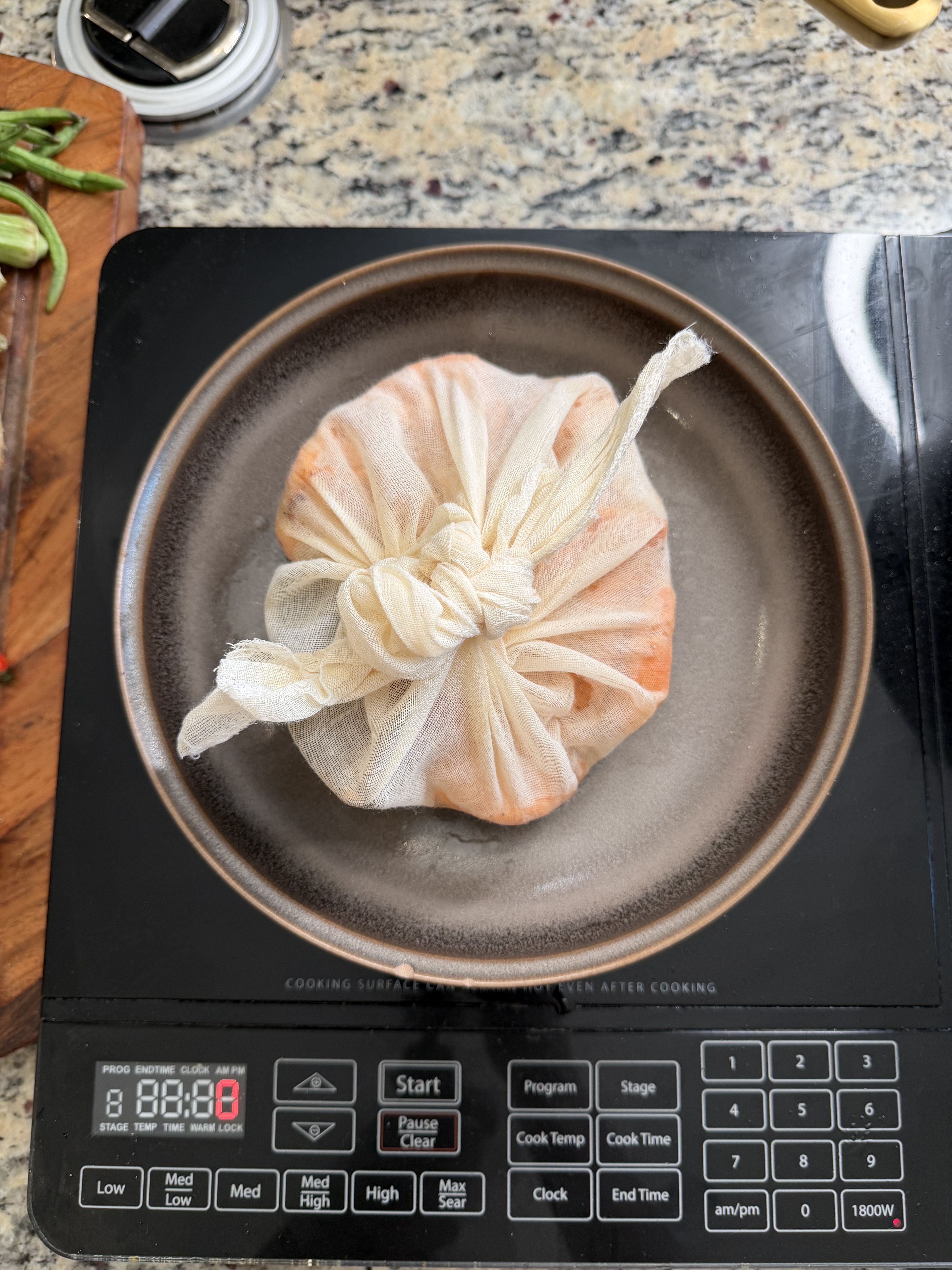
- Salmon tail and spine: Bony cuts that add extra flavor to the broth. I recommend wrapping them in cheesecloth to make them easier to remove.
- Taro: Adds a soft, starchy texture and makes the soup extra filling.
- Daikon radish: Mild and slightly peppery, with a texture that holds up well in the broth.
- Eggplant: Becomes tender and soaks up the flavorful sour broth.
- Bok choy: Adds freshness and a tender, leafy texture.
- Okra: Adds another layer of texture and pairs especially well with the sour broth.
- Long green beans: Add a fresh crunch and plenty of vegetables.
- Tomatoes: Add a little sweetness and acidity to balance the broth.
- Onion: Builds the savory base of the soup.
- Thai chilies: Add a little heat to the broth.
- Ginger: Adds warmth and helps balance the strong flavor of the fish.
- Garlic: Adds another layer of savory flavor.
- Knorr Tamarind soup mix: Gives sinigang its signature sour and tangy flavor.
- Fish sauce: Adds saltiness and savory umami flavor.
- Salt and black pepper: Simple seasoning for the fish.

How to Make Salmon Head Sinigang (Filipino Sour Soup)
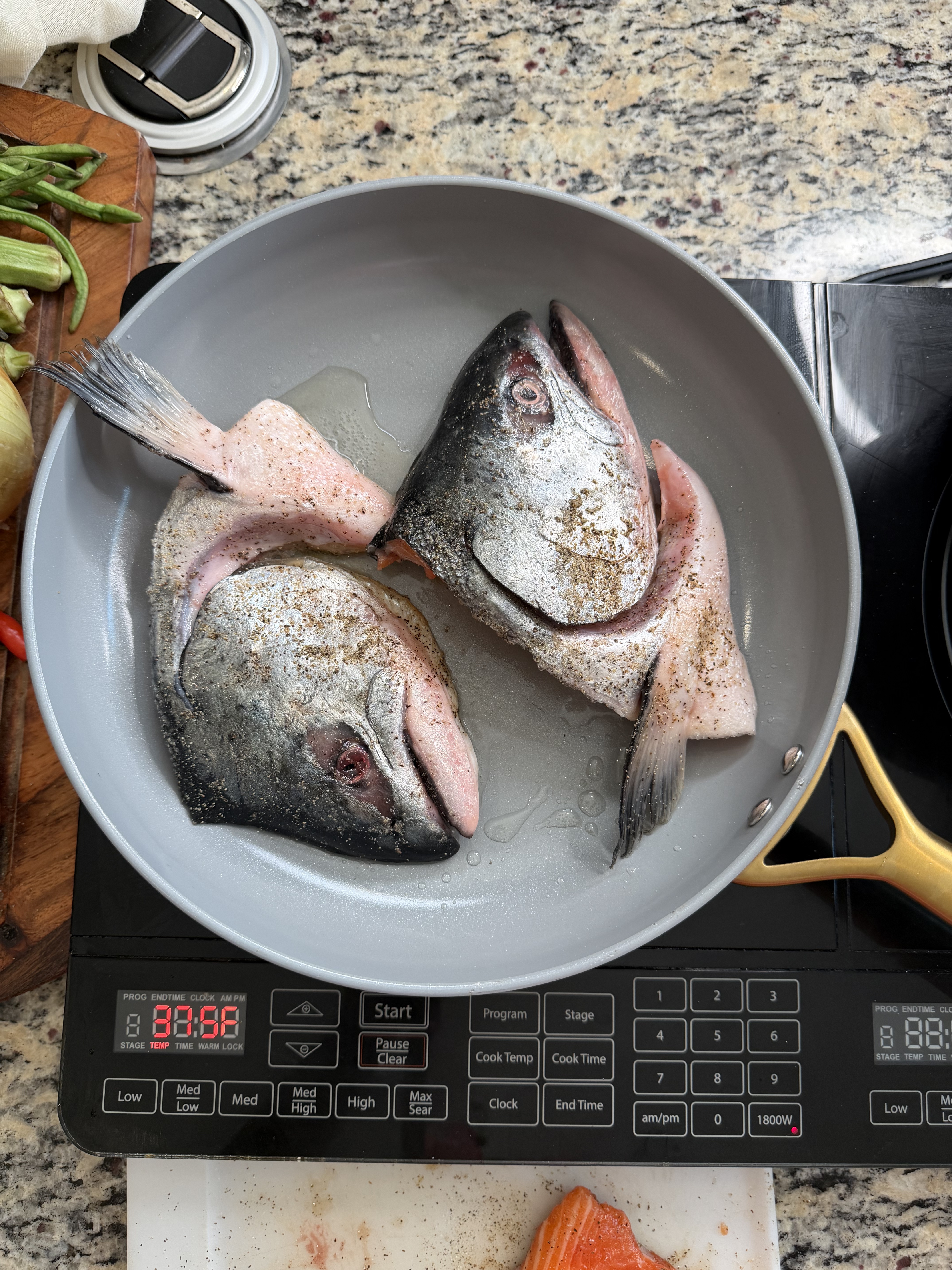
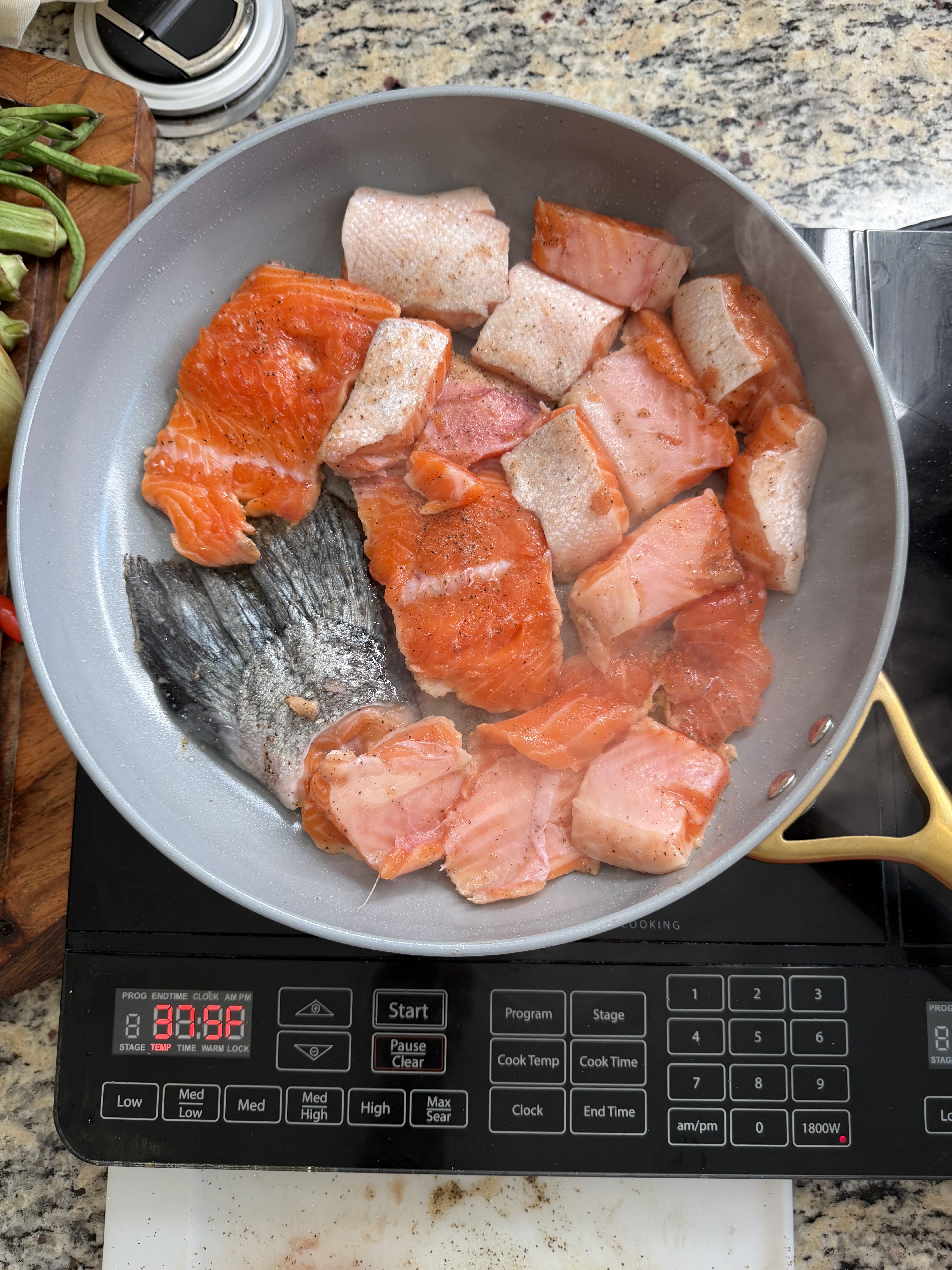
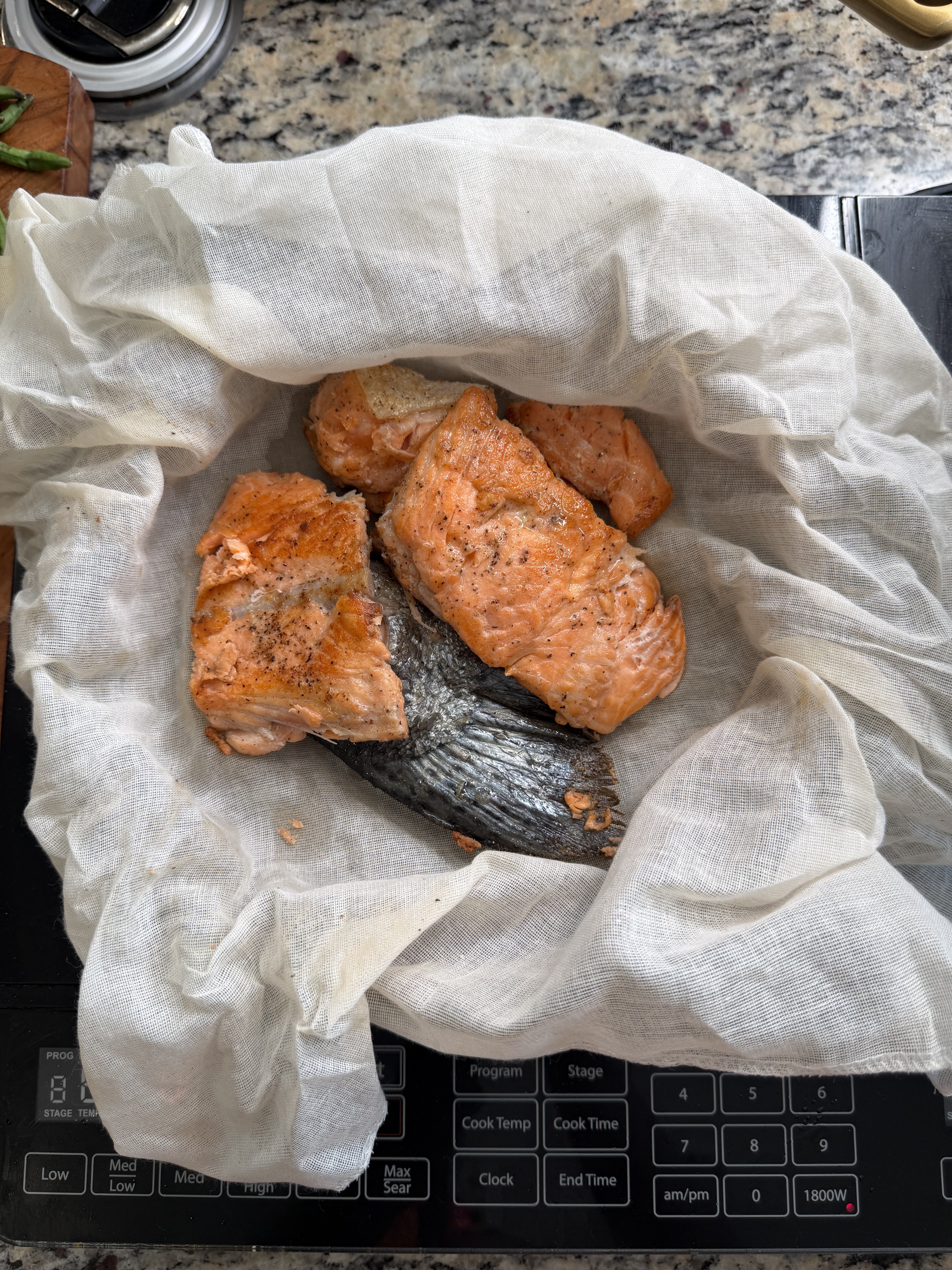
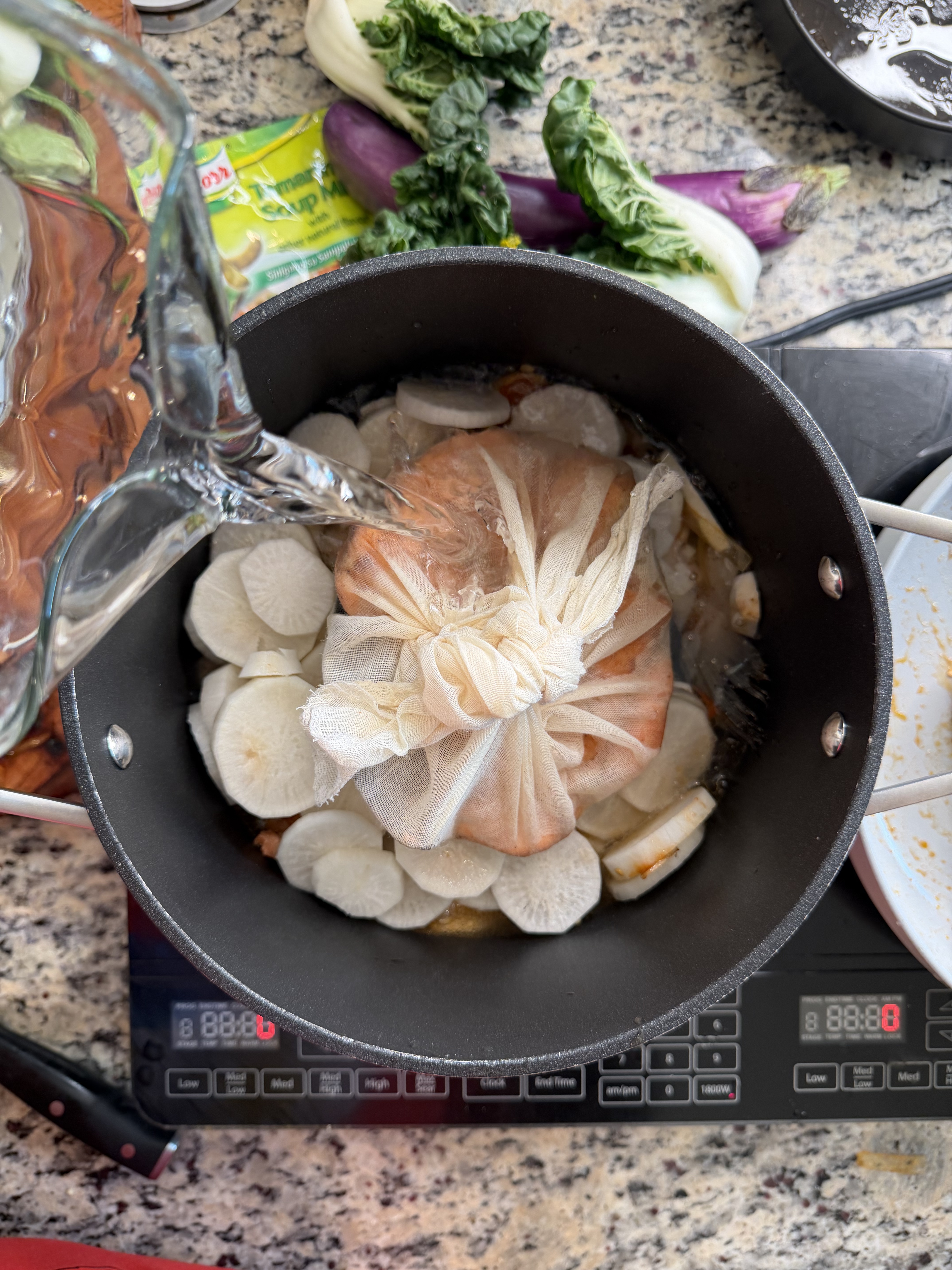
Start by seasoning the salmon belly, salmon head, tail, and spine with salt and black pepper. Lightly sear the fish until browned, then set the salmon belly and salmon head aside. Place the salmon tail and spine into a piece of cheesecloth and tie it closed. This keeps the smaller bones contained while still allowing those bony cuts to flavor the broth.


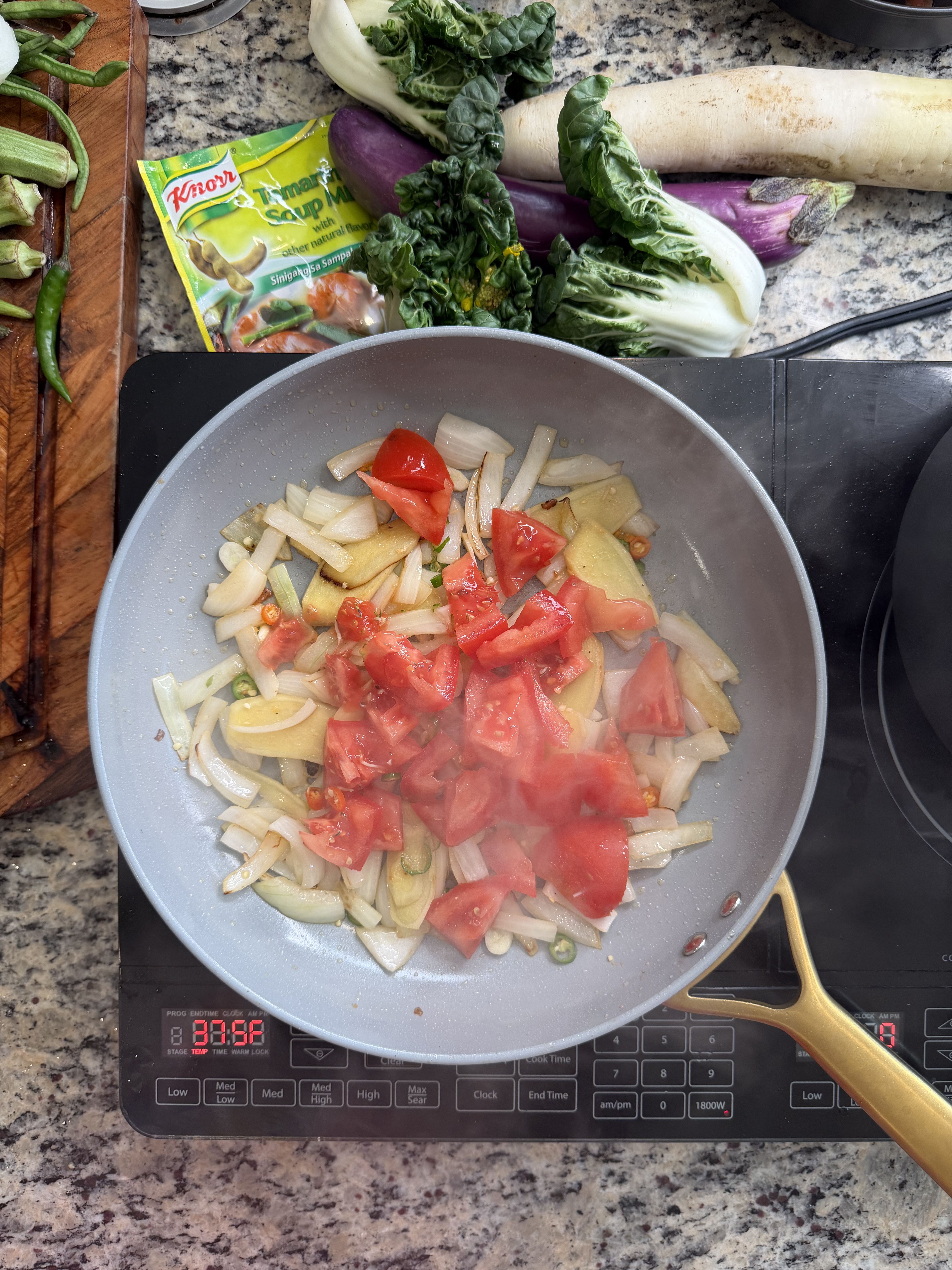
In the same pan, sauté the onion, garlic, ginger, and Thai chilies until the aromatics begin to soften. Transfer the aromatics to a large pot along with the cheesecloth-wrapped fish bones, taro, daikon radish, fish sauce, and water.


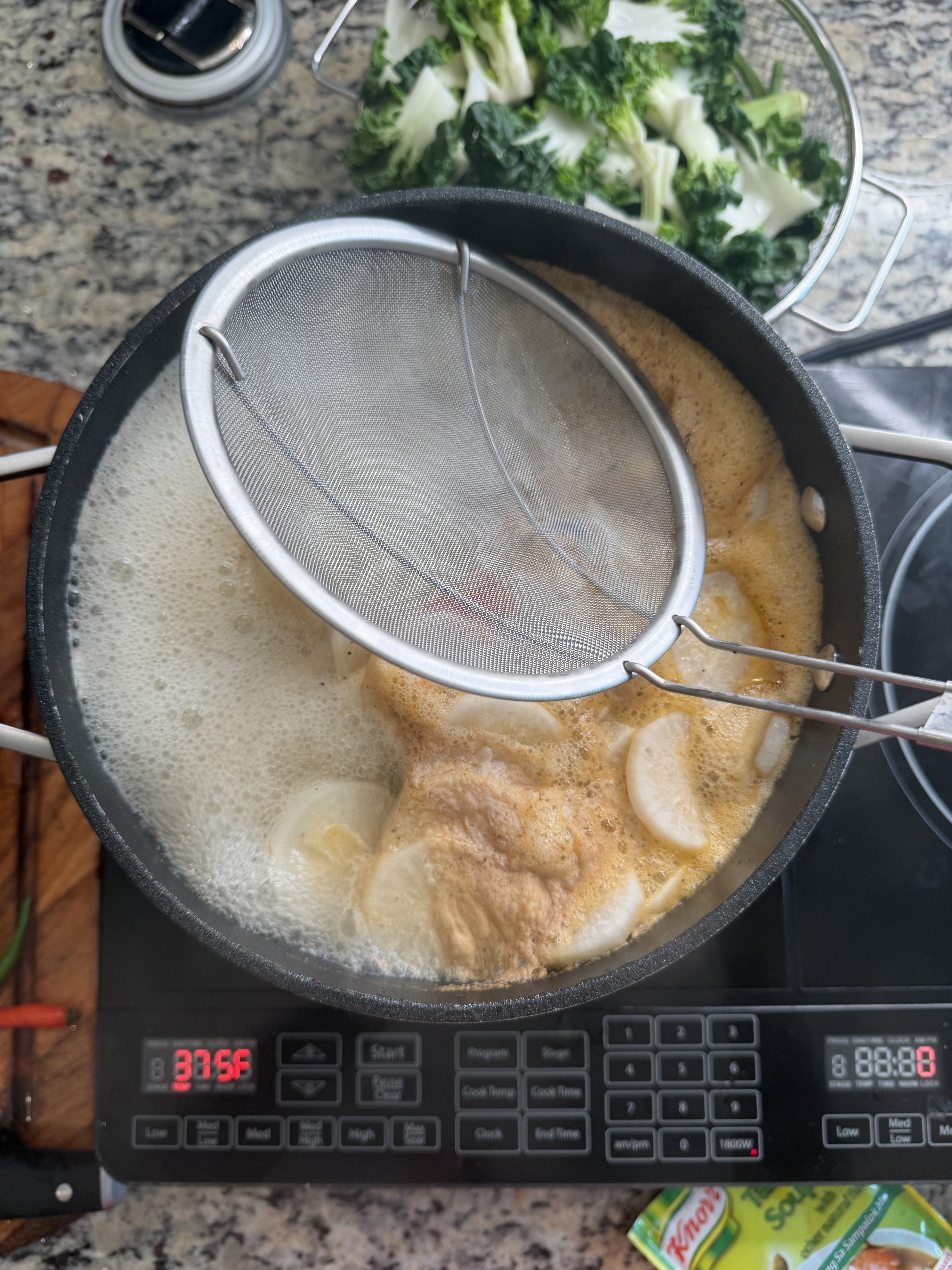
Bring the broth to a roaring boil and let it boil for about 15 to 20 minutes. Skim any foam from the top as it cooks, then carefully remove the cheesecloth-wrapped fish bones.


Don’t throw the fish in the cheesecloth away! There will still be plenty of meaty pieces attached to those bones, and they’re completely edible. The cheesecloth is simply there to keep the small bones from breaking loose and floating throughout your soup. Once you remove the cheesecloth, you can pick the meat from the bones and enjoy it with your soup or over your rice.
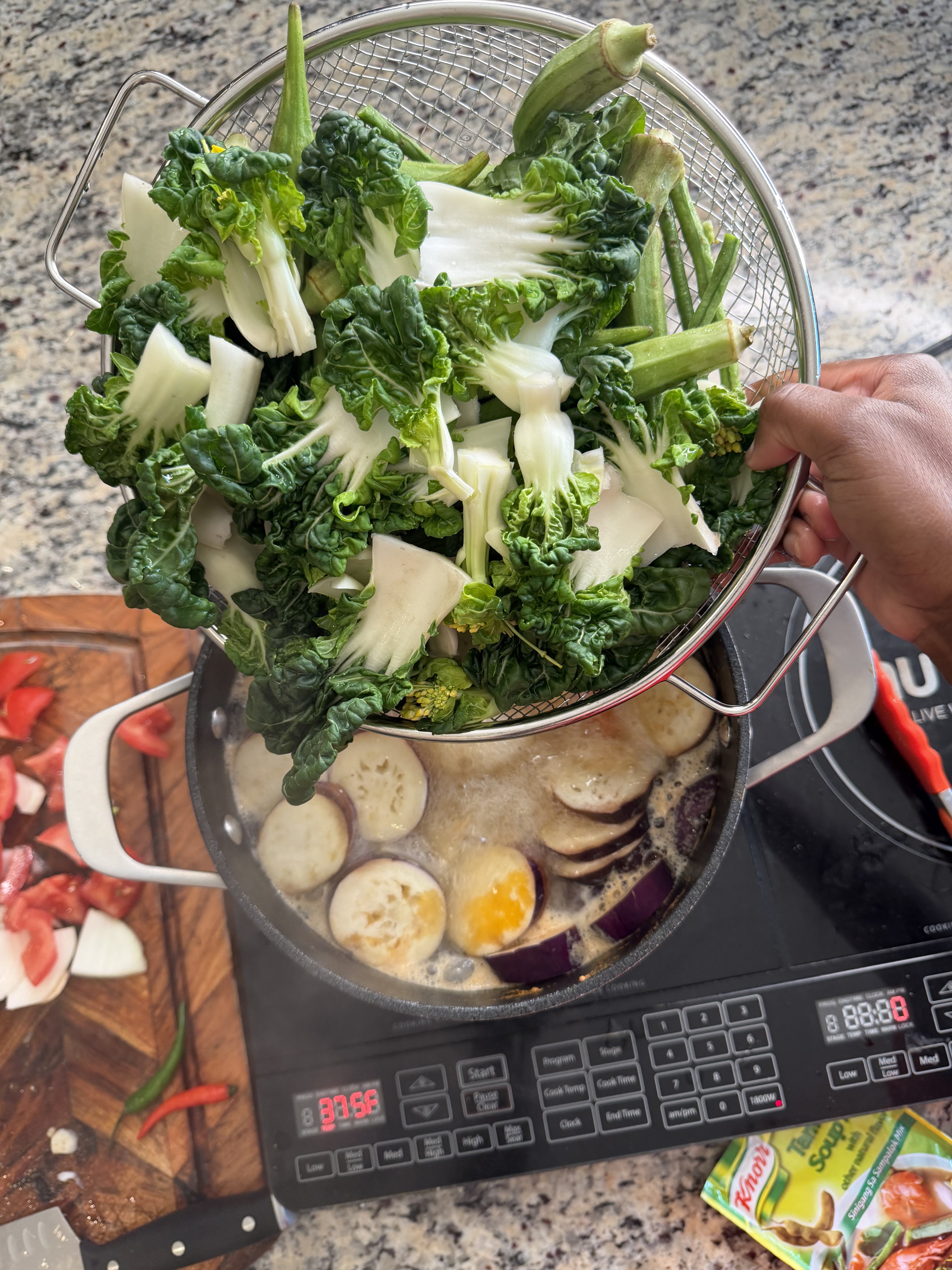
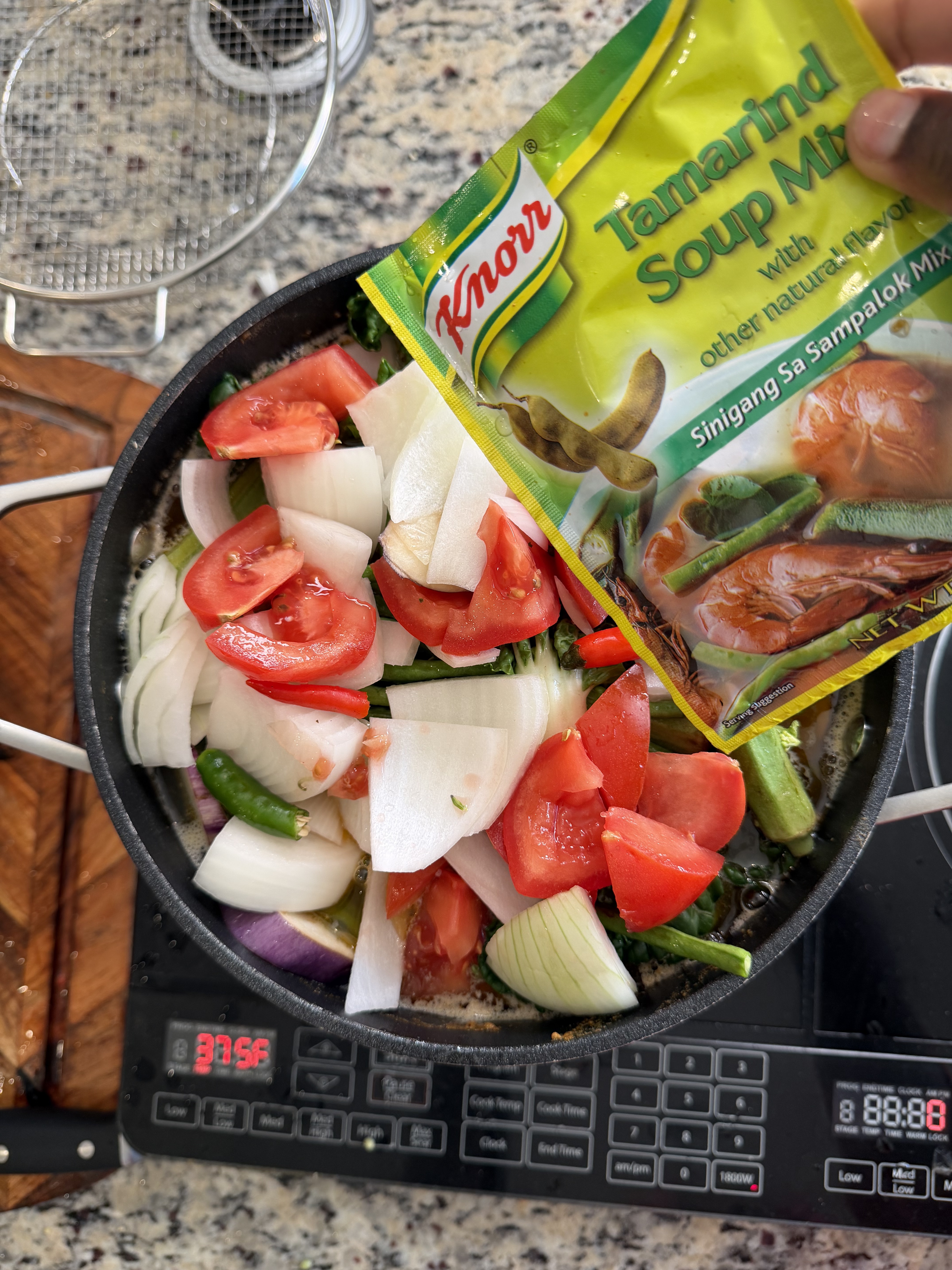
Next, add the remaining vegetables, including the eggplant, bok choy, okra, long green beans, and tomatoes. Stir in the tamarind soup mix and let the vegetables cook until they begin to soften.


Once the vegetables have started to soften, turn the heat off completely. Then gently add the salmon head and salmon belly, placing the salmon head on top of the other ingredients. The soup will already be extremely hot, so the residual heat will continue cooking the fish without the need to keep the pot boiling.
This is an important step because you want to avoid overcooking the salmon. When I made this for the first time, I placed the salmon head at the bottom of the pot and continued stirring everything around it. The head became extremely tender and started falling apart, which left little bones throughout the soup. Keeping the salmon head on top and letting it gently cook in the hot broth helps it stay intact.

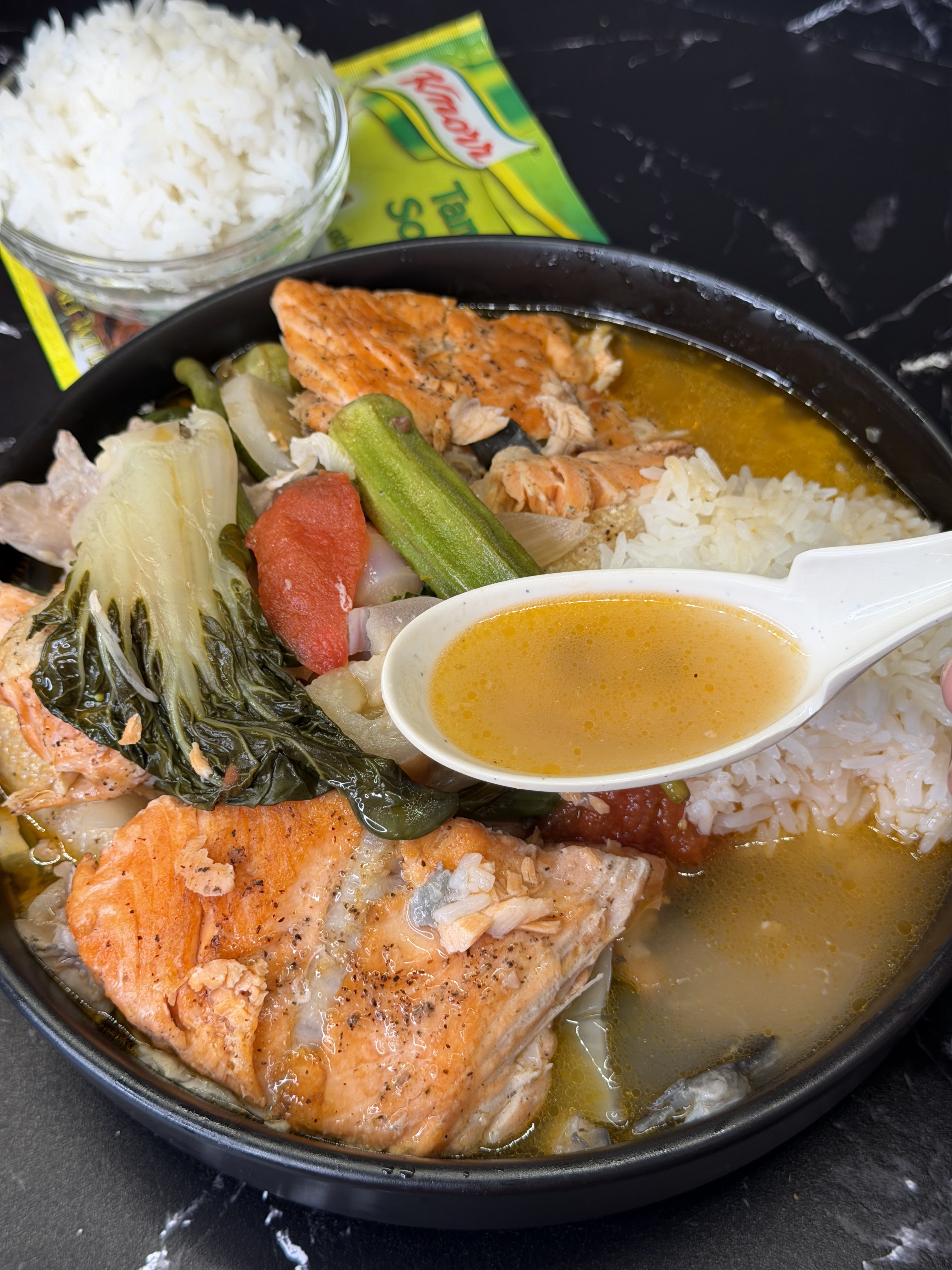
Let the salmon sit in the hot broth until cooked through, then taste the soup and adjust the tamarind soup mix, fish sauce, salt, or pepper as needed. Serve hot with steamed white rice and enjoy!
Hey Foodie! Want more recipes like this? Subscribe to Ne’s Kitchen Newsletter!
How Sour Should Sinigang Be?
This is completely up to you! My husband and I LOVE our sinigang extra sour, so I used two packs of Knorr tamarind soup mix for this recipe. If you prefer a milder sour flavor, start with one pack or even half a pack and add more until the broth tastes the way you like it.
Tips for Not Messing Up Salmon Head Sinigang (Filipino Sour Soup)
- Don’t overcook the salmon head. This is the biggest lesson I learned from making this recipe. Add the salmon head closer to the end so it stays intact and doesn’t fall apart into the broth.
- Use cheesecloth for the bony cuts. Wrapping the salmon tail and spine in cheesecloth makes it much easier to remove the bones from the soup once they have flavored the broth.
- Taste the broth before adding all of the tamarind. Everyone has a different preference for how sour their sinigang should be, so add the soup mix gradually.
- Keep an eye on your vegetables. Add vegetables according to how long they need to cook so they remain tender without becoming mushy.

Variations & Substitutions
- Adjust the sourness: I used two packs of tamarind soup mix because my husband and I love our sinigang extra sour. For a milder broth, start with half a pack or one pack and add more to taste.
- Add miso: Several people recommended adding miso when I shared this recipe. Miso can give fish sinigang a thicker texture and add another layer of savory flavor. I didn’t use it in this version, but it’s something I want to try next time.
- Ginger is optional: This was definitely a debate in my comment section! Most of the Filipino viewers who shared their thoughts said ginger is commonly used in fish sinigang, while others said it isn’t necessary. From what I’ve seen, ginger is often included when making fish sinigang, but it’s completely up to you. If you don’t want to use it, you can leave it out.
- Use milkfish: Milkfish, also known as bangus, is another popular fish used for fish sinigang. You can use it in place of salmon if you prefer.
- Make it your own: Sinigang can look completely different from one household to another. Some people use more vegetables, some use fewer, and everyone has their own combination of ingredients. Add more of the vegetables you love, leave out the ones you don’t, and adjust the recipe to your liking. My husband and I love our sinigang packed with vegetables and meat, and we like it extra sour, so that’s how I make ours. Your bowl doesn’t have to look exactly like mine!
- Adjust the heat: Add more Thai chilies for a spicier broth or leave them out for a milder version.
Other Recipes You Will Love
If you loved this, you have to try my Pork Sinigang!
Salmon Head Sinigang (Filipino Sour Soup)
Description
A comforting Filipino sour soup made with salmon head, tender salmon, fresh vegetables, fish sauce, and tangy tamarind broth. This fish sinigang is rich, flavorful, and perfect served with rice.
Ingredients
Instructions
-
Season the salmon belly, head, tail, and spine with salt and pepper. Lightly sear, then set the salmon belly and head aside. Wrap the tail and spine in cheesecloth and tie closed.
 +1 photos
 -
Sauté the onion, garlic, ginger, and Thai chilies until softened. Transfer to a large pot with the cheesecloth-wrapped fish bones, taro, daikon, fish sauce, and water.
-
Bring to a roaring boil and cook for 15 to 20 minutes, skimming any foam from the top. Remove the cheesecloth-wrapped fish bones and pick any remaining meat from the bones to serve with the soup or rice.

-
Add the eggplant, bok choy, okra, long green beans, and tomatoes. Stir in the tamarind soup mix and cook until the vegetables begin to soften.
-
Turn the heat completely off. Gently add the salmon head and belly, placing the head on top. Let the residual heat cook the salmon through without stirring.

-
Taste and adjust the tamarind soup mix, fish sauce, salt, or pepper as needed. Serve hot with steamed white rice.
Nutrition Facts
Servings 6
- Amount Per Serving
- Calories 330kcal
- % Daily Value *
- Total Fat 18g28%
- Saturated Fat 4g20%
- Cholesterol 95mg32%
- Sodium 1250mg53%
- Total Carbohydrate 19g7%
- Dietary Fiber 5g20%
- Sugars 7g
- Protein 28g57%
* Percent Daily Values are based on a 2,000 calorie diet. Your daily value may be higher or lower depending on your calorie needs.